Categories
Controversy Quotations

A Problem with Rahner

Karl Rahner is in many ways an extremely wonderful theologian. As I have been poking around in a compilation book, The Great Church Year, on several occasions I have wondered why it is that no contemporary Protestant theologians seem to be saying things so wonderful, or saying them so well, as this Jesuit. Yet Rahner is vitiated by his communion, as is demonstrated in the following quote:

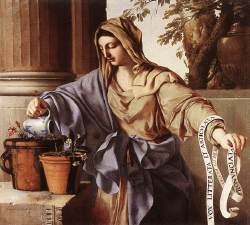
Teresa has been declared a doctor of the church. This event naturally has some significance for the position and function of women in the church. The charism of teaching�and indeed of teaching directed to the church as such�is not merely a male prerogative. The idea of women being less gifted in an intellectual or religious sense is thus repudiated. It is thus expressly recognized that women may study theology, particularly since charism and the study of theology methodically accomplished cannot be regarded as opposites.

It should not be said that Teresa is an exception. For all doctors of the church, the men too among them, are exceptions. And the proclamation declaring her a doctor of the church makes it clear that women have not previously been given this title not because none of them was worthy of it, but because of reasons rooted in the cultural status of women at the time. This proclamation clearly shows that 1 Corinthians 14:34 is a time-conditioned norm (justified at the time) imposed by the apostle Paul.

pp.360,361 of the above-referenced book: �Teresa of Avila: Doctor of the Church� [From Opportunities for Faith, 123-26]

teresaavila.jpg

Rahner has to take the proclamation of the church that Teresa is a Doctor of the Church as a basic and essential datum. He is not free to ignore or contradict it. It must be made a part of his theological system. And the ultimate effect of this, is that Holy Scripture is denied: not in so many words, of course, but 1 Corinthians 14:34 definitely ceases to be a functional part of Rahner’s theological basis. In order to save the appearances and duly respect Paul VI, Paul the Apostle is relegated in that part of his writings to the status of an interesting but ultimately irrelevant dinosaur.

Categories
Quotations Theological Reflections

Rahner’s Slant on the Ascension

Here are some striking statements by Karl Rahner. They can be found in The Great Church Year, pp.204,205 or in The Eternal Year. There are some pretty dramatic problems with Rahner, some of which may be documented in time to come on this blog, but the critique of pantheism below is very good.

And so my faith and my consolation are centered on this: that he has taken with him everything that is ours. He has ascended and he sits at the right hand of the Father. �I see the Son of man standing at the right hand of God.� The absolute Logos shall look at me in eternity with the face of a man. Those who theorize on the beatific vision forget this. As yet, I have read nothing about this in any modern tract in dogma. How strange! At this point pious ascetics read into the silence of the theologians some sentimental anthropomorphism about joy. And what is more they even dare�on their way to the beatific vision�to bypass the humanity of Jesus. As though we can do this so casually! Whoever �imagines� things this way obviously is not sufficiently aware that God’s revelation was a man.

Jesus has taken with him what he was, and what we are, to such an extent that he himself, Jesus of Nazareth, abides forever. We must be more important than we thought, of more permanent value and of more substance when we consider that this is feasible in spite of our foolish or despairing pride. One could reduce all Christianity to this one formula: it is the faith in which God so surpassed the pride of human beings that the person’s grossest imaginings of his own worth are degraded to sinful disbelief and almost brutish timidity.

pantheism.jpg

Moreover when one indulges in pantheistic imaginings about God’s existence, on closer inspection one certainly does not make oneself into God, but rather God into oneself. Pantheism is no objection against what has been said above, for what does the incarnation, what does grace and glory mean except that the human person can endure in the midst of God, in the midst of this absolute fire, in the midst of this incomprehensibility. He or she can endure directly before one who is so exalted above everything that is outside of him that it is simply inexpressible. This is, nevertheless, the most unlikely truth. And it is celebrated in Christ’s ascension. For in his ascension this truth has been definitively realized.

In the first paragraph it seems very likely that Rahner was following Leo the Great.

Categories
Quotations Theological Reflections

The Unlikeliness of Truth

From Karl Rahner.� I got it from a compilation book, The Great Church Year.� But it can be found also in The Eternal Year, 19-26.

rahner.jpg

If we should examine the birth of the child of today’s feast merely from our point of view, then we could say of him and of us, too, only what is written in the dismal, bitter text of Job 14:1-2: �Man that is born of a woman is of few days, and full of trouble. He comes forth like a flower and withers; he flees like a shadow, and continues not.� From our point of view, we could be no more than a tiny point of light in the unlimited dark, a point of light that can only make the darkness even more frightening. We would be no more than a sum that didn’t come out right. We seem cast off into time, which makes everything disappear, forced into existence without being asked, laden with wearisome toil and disappointment. Through our own fault we burden ourselves with pain and punishment. We begin to suffer death in the moment when we are born. We are insecure and driven to be childish about all that is illusory, all that is called the sunny side of life � which in reality should be only the refining means of ensuring that the martyrdom and torture of life do not end too quickly.

But if in faith we say, �It is Christmas� � in faith that is determined, sober, and above all else courageous � then we mean that an event came bursting into the world and into our life, an event that has changed all that we call the world and our life. This event alone has provided a goal and a purpose for everything. It has not only put an end to the saying of Ecclesiastes that there is nothing new under the sun, but also to the eternal return of modern philosophers; it is an even through which our night � the fearful, cold, bleak night where body and soul await death from exposure � has become Christmas, the holy night. For the Lord is there, the Lord of creatures and of my life. He no longer merely looks down from the endless �all in one and once for all� of his eternity upon my constantly changing life that glides by far below him. The eternal has become time, the Son has become man, the eternal purpose of the world, the all-embracing meaningfulness of all reality has become flesh.

Through this fact, that God has become man, time and human life are changed. Not to the extent that he has ceased to be himself, the eternal Word of God himself, with all his splendor and unimaginable bliss. But he has really become human. And now this world and its very destiny concern him. Now it is not only his work, but a part of his very self. Now he no longer watches its course a spectator; he himself is now within it. What is expected of us is now expected of him; our lot now falls upon him, our earthly joy as well as the wretchedness that is proper to us. Now we no longer need to seek him in the endlessness of heaven, where our spirit and our heart get lost. Now he himself on our very earth, where he is no better off than we and where he receives no special privilege, but our every fate: hunger, weariness, enmity, mortal terror and a wretched death. That the infinity of God should take upon itself human narrowness, that bliss should accept the mortal sorrow of the earth, that life should take on death � this is the most unlikely truth. But only this � the obscure light of faith � makes our nights bright, only this makes them holy.

God has come. He is there in the world. And therefore everything is different from what we imagine it to be. Time is transformed from its eternal onward flow into an event that with silent, clear resoluteness leads to a definitely determined goal wherein we and the world shall stand before the unveiled face of God. When we say, �It is Christmas,� we mean that God has spoken into the world his last, his deepest, his most beautiful word in the incarnate Word, a word that can no longer be revoked because it is God’s definite deed, because it is God himself in the world. And this word means: I love you, you, the world and human beings. This is a wholly unexpected word, a quite unlikely word. For how can this word be spoken when both the human person and the world are recognized as dreadful, empty abysses? But God knows them better than we. And yet he has spoken this word by being himself born as a creature. The very existence of this incarnate Word of love demands that it shall provide, eye to eye and heart to heart, an almost unbelievable fellowship, an astonishing communion between the eternal God and us. Indeed, it says that this communion is already there. This is the word that God has spoken in the birth of his Son.

Categories
Quotations Theological Reflections

The Purpose of Revelation

Louis Berkhof, Introduction to Systematic Theology, pp.137,138

In speaking of the purpose of revelation we may distinguish between its final end and its proximate aim. The final end can only be found in God. God reveals Himself, in order to rejoice in the manifestation of His virtues, especially as these shine forth in the work of redemption and in redeemed humanity. The proximate aim of revelation, however, is found in the complete renewal of sinners, in order that they may mirror the virtues and perfections of God. If we bear in mind that revelation aims at the renewal of the entire man, we shall realize that it cannot seek the realization of its aim merely by teaching man and enlightening the understanding (Rationalism), or by prompting man to lead a virtuous life (Moralism), or by awakening the religious emotions of man (Mysticism). The purpose of revelation is far more comprehensive than any one of these, and even more inclusive than all of them taken together. It seeks to deliver from the power of sin, of the devil, and of death, the entire man, body and soul, with all his talents and powers, and to renew him spiritually, morally, and ultimately also physically, to the glory of God; and not only the individual man, but mankind as an organic whole; and mankind not apart from the rest of creation, but in connection with the whole creation, of which it forms an organic part.

jt-milkyway-woody.jpg

This statement manifests rather nicely that a lack of recognition of the cosmic implications of God’s saving activity is not, after all, a characteristic of the mainstream, authoritative Reformed.

Categories
Poetry Quotations

Something a Little Different

Edmund Waller, Go Lovely Rose

Go, lovely rose

Tell her that wastes her time and me,

That now she knows,

When I resemble her to thee,

How sweet and fair she seems to be.

Tell her that’s young

And shuns to have her graces spied,

That hadst thou sprung

In deserts where no men abide,

Thou must have uncommended died.

Small is the worth

Of beauty from the light retired:

Bid her come forth,

Suffer herself to be desired,

And not blush so to be admired.

Then die that she

The common fate of all things rare

May read in thee;

How small a part of time they share

That are so wondrous sweet and fair!

peachrose.jpg

Categories
Controversy Quotations

The Subtilty of Heretics Unmasked

Leo the Great, Letter to the Bishop of Aquileia

[Speaking of the confession of faith he wanted to be made at a provincial synod by some who had been re-admitted into fellowship with the Catholics after association with the Pelagians or Celestians, but had not been required to recant] Let nothing obscure, nothing ambiguous be found in their words. For we know that their cunning is such that they reckon that the meaning of any particular clause of their execrable doctrine can be defended if they only keep it distinct from the main body of their damnable views.

aquileia1.jpg

Which is a sound piece of advice. Whole systems must be considered, and heretics must not be allowed wiggle room.

Categories
Quotations Theological Reflections

Aquinas and Authority

Thomas Aquinas, Summa Theologica P(1)-Q(1)-A(8)-(RO)2

thomasaquinas.jpg

Nevertheless, sacred doctrine makes use of these authorities as extrinsic and probable arguments; but properly uses the authority of the canonical Scriptures as an incontrovertible proof, and the authority of the doctors of the Church as one that may properly be used, yet merely as probable. For our faith rests upon the revelation made to the apostles and prophets who wrote the canonical books, and not on the revelations (if any such there are) made to other doctors. Hence Augustine says (Epis. ad Hieron. xix, 1): �Only those books of Scripture which are called canonical have I learned to hold in such honor as to believe their authors have not erred in any way in writing them. But other authors I so read as not to deem everything in their works to be true, merely on account of their having so thought and written, whatever may have been their holiness and learning.�

Which ought to make it rather clear that Aquinas may have been quite uncomfortable at Vatican I.

Categories
Quotations Theological Reflections

Hans Urs von Balthasar

Yesterday I just finished reading a little book, Credo: Meditations on the Apostles’ Creed, by Hans Urs von Balthasar (1905-1988), rather famous Swiss theologian of the Roman Catholic persuasion.� It is among the last of his writings, and is very simple.� Below are some quite fine and noble things that he said, but I would not want to give a wrong impression: these are what I considered the high points of the book, and some of them were quite high: but alas that was not all he said.� He says some unfortunate things about Mary, for instance (pp.70,83), and seems very preoccupied with the relation of the sexes to the Trinity (e.g, pp.30,78): his views on the one and the many, intra-Trinitarian relationships, and certain of the divine attributes also seem somewhat substandard to me, as well as the things one would expect from a Roman Catholic: a certain lack of understanding with regard to the church, the judgment, etc. (see, e.g., problem passages on pp.29,48,51,63,71).� I found his stress on the individual rather interesting, given the current buzz about community (pp.83-86).
Anyway, the upshot of all of this is, that I am preserving what stood out as the highlights of this book (borrowed from the Marion County Library and shortly to be returned), but what is below is by no means a full picture or an at all unqualified endorsement of this man’s theological writings.
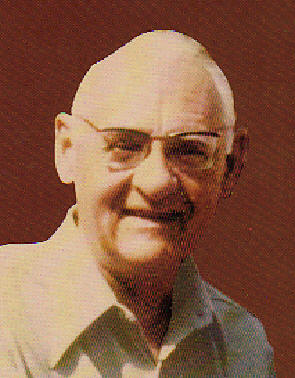
vonbalthasar.jpg

…if God is not in himself love, then, in order to be love, he would need the world, and that would spell the end of his divinity�or we would have to characterize ourselves as part of God and thus ascribe necessity to ourselves. (p.37)

earth.jpg

Why, then is there a world at all?

As a Christian, one can venture an initial answer (nobody else can do so): If three must exist within God himself (in order that he can be called �love�) a One and an Other and their Union, then it is �very good� that the Other exists, then the world is not, as in the rest of the monotheisms, a fall from the One. (pp.38,39)

garden.jpg

The �Other� is, in the first instance, the Son, and therefore other beings can be created only in the Son (�without him was not anything made that was made,� Jn 1:3). Hence, if the world is to be �risked� and judged conclusively to be �very good,� it is the Son who is guarantor for the success of the venture. (p.39)

gold09.jpg

Yet still we acknowledge in faith that he does incarnate himself, does not himself take hold of the human nature that he will inhabit, but allows himself to be conveyed, as the �seed� of the Father, into the virginal womb by the Holy Spirit. But this means that the occasion of his Incarnation is already the beginning of his obedience. Theologians have very often claimed the opposite, on the ground that the union of the human and the divine natures occurs solely in the Son as the Second Person in the Divinity.

However, the creed describes not a �taking of something to oneself,� but an �acquiescing in something that happens to one.� In this pretemporal obedience, the Son still differs profoundly from naturally engendered human beings, who are not asked whether they wish to come into being or not; the Son permits, in full consciousness and with full consent to the divine plan for redemption, himself to be used as the Father wishes. But already here, he does so in the Holy Spirit of obedience, through which he will atone for the disobedience of Adam and �infiltrate� it. (pp.45,46)

yoke-and-buckets-s.jpg

For us humans, that will mean that our obedience, which we owe to our Creator and Lord and to all his direct and indirect commands, can be, in Jesus Christ, and even must be, an expression of our love; so that any love of God or other human beings which excludes obedience, or wishes to get beyond it, does not at all deserve the name love. (pp.46,47)

disobedient.JPG

…[Of the death of Christ, that He] died with the surrender of his Spirit into the hands of the absent…. (p.52)

throne.jpg

Thus, in the communion of saints in God, the adventure of creative, imaginative love are intensified beyond all counting. Life in God becomes an absolute miracle. Nothing is given in a concluding way, the act of giving goes on unfolding boundlessly. The heavenly are therefore always ready to help in cases of earthly need�certainly through eternal, perhaps also through temporal, gifts�so as to rekindle our courage to strive, despite everything, toward the life everlasting, and to grant us a foretaste of that which awaits us. And if we are given to suffer, deeper shafts are sunk in us than we thought we could contain, depths destined to become, in the life everlasting, reservoirs of greater happiness, wells still more productive. Wells that flow forth of themselves, gratis; for in the life everylasting [sic], all is gratis. The words �without money,� �for no payment,� when it is a matter of God’s gifts, run through the whole of the Bible (Is 55:1; Sir 51:52; Mt 10:8; Rev 21:6; 22:17). This �gratis� is the innermost essence of divine love, which has no other ground than itself; and by it, everything that exists in eternal life with God is determined. And precisely because this love is without any ground, its depths cannot be plumbed; one never gets to the bottom of it, it remains deeper than anything that can be grounded or �put into concepts.� Hence, Paul quite accurately says: �Know the love…which surpasses knowledge,� in order to �be filled with all the fulness of God� Eph 3:19).� (pp.103, 104)


shafts-2.jpg